Practical Writing Strategies
Engaging Activities for Secondary Students
24 ready-to-use classroom activities built around a six-stage writing cycle. Move beyond formulaic writing instruction and guide students through every stage of the writing process.
The Writing Cycle
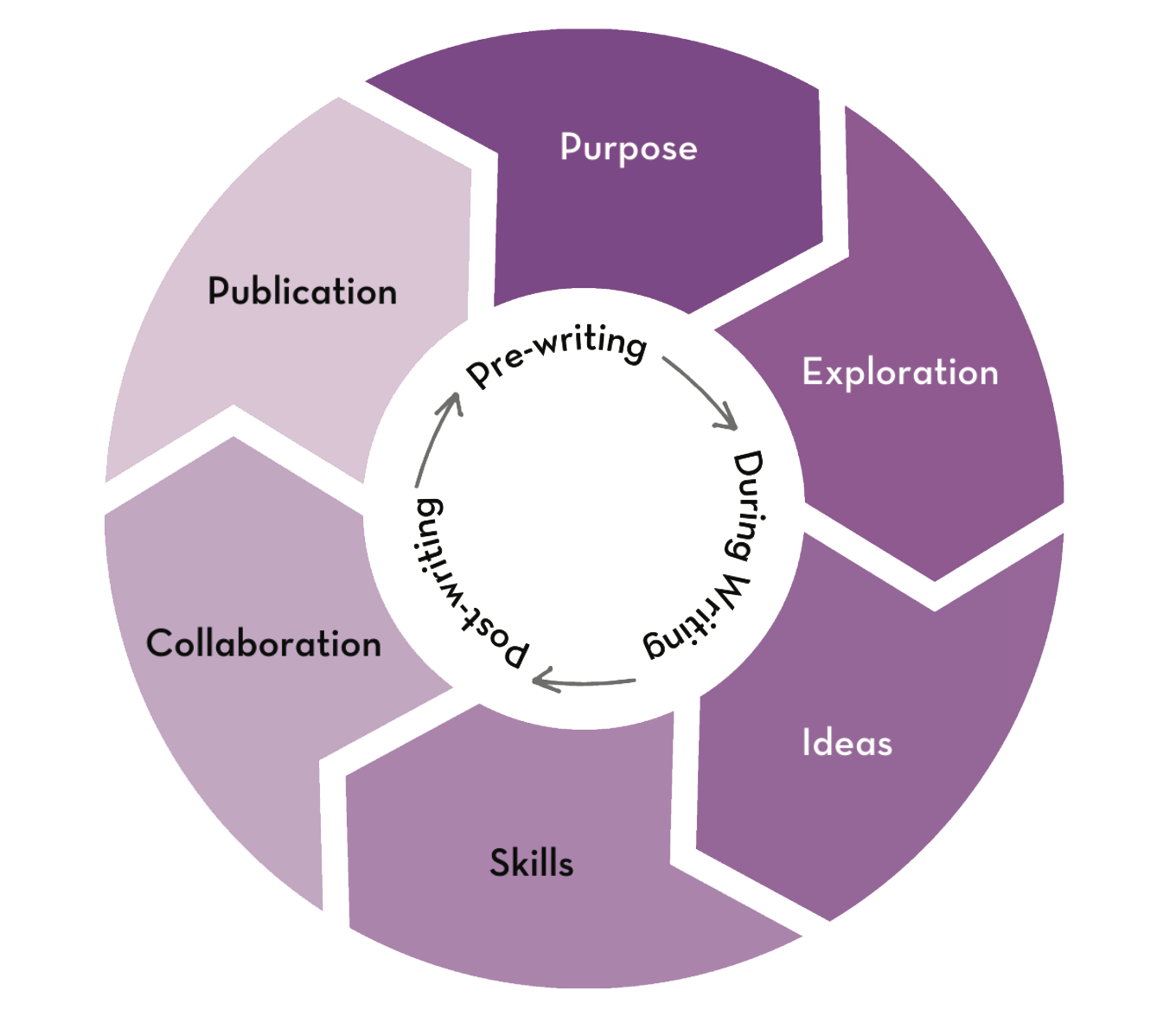
At the heart of the book is a six-stage writing cycle that students move through — not always linearly, but with intention. Each stage builds on the last, guiding students from purpose through to publication.
Purpose
Understanding why we write and who we write for.
2Exploration
Reading and analysing model texts to understand how they work.
3Ideas
Generating, capturing, and developing ideas for writing.
4Skills
Building word-level, paragraph-level, and text-level writing skills.
5Collaboration
Working with peers to improve writing through feedback and co-creation.
6Publication
Sharing finished writing with authentic audiences.
Ready-to-Use Activities
Each activity includes teacher instructions, step-by-step guides, and a downloadable student handout. Browse all 24 activities or filter by strategy.
The Roadmap
Students create a personalised roadmap of achievable goals for their writing project, taking ownership of the process by...
PurposeThink Tank
Students consider a topic from multiple personal perspectives, like a think tank ruminating on the issue of the day. The...
PurposeWrite for the Right Crowd
Students move beyond generalising their audience towards specifically targeting who they will write to. Once they have r...
PurposeAudience Aspects
Students work in small groups to write a persuasive guide to their hometown, focusing on structuring and sequencing writ...
ExplorationNarrative and Reflective – Resonance
Students explore a narrative or reflective mentor text by identifying words and phrases that resonate with them, buildin...
ExplorationInformative and Persuasive – Cause and Effect
Students explore informative and persuasive mentor texts by mapping the cause-and-effect relationships within them, unde...
For Schools
Beyond individual activities, Part Two addresses whole-school approaches to writing: constructing units of work, giving effective feedback, writing across the curriculum, fostering a culture of writing, and navigating the future of writing in the age of AI.
Explore Part Two